Category: News

  • The Foster FAQ: 20 Questions New Fosters Are Afraid to Ask (But Should)

    If you’ve ever wanted to foster but felt unsure… this is for you.

    Fostering is one of the most powerful ways to save an animal’s life.

    But let’s be honest:

    Most people don’t say “yes” to fostering because they’re worried.

    Not because they don’t care — but because they’re afraid they’ll mess up.

    They wonder things like:

    • “What if I’m not good at this?”
    • “What if the dog bites?”
    • “What if I fall in love and can’t give them back?”
    • “What if my house isn’t perfect?”
    • “What if my dog hates the foster?”

    At Seuk’s Army, we want you to know something:

    Those questions are normal.

    And the fact that you’re asking them… is exactly why you’d be a great foster.

    So we’re answering the foster questions people are afraid to ask — honestly, clearly, and without judgment.


    1) “Do I need experience with dogs to foster?”

    No.

    Experience helps, but it’s not required.

    We will guide you and match you with a foster dog that fits your comfort level.

    Fostering isn’t about being an expert — it’s about being safe and consistent.


    2) “Do I need a fenced yard?”

    Not always.

    Many fosters succeed in apartments or homes without fenced yards.

    What matters most is:

    • willingness to leash walk
    • following safe routines
    • supervision

    A yard is helpful — but not required.


    3) “What if I work a normal job?”

    That’s totally fine.

    Most fosters work.

    We focus on matching you with a dog that fits your schedule.

    Some dogs do great being alone while you’re at work — as long as they have a safe space.


    4) “What if my home is small?”

    Small home does not mean small heart.

    Many rescue dogs prefer calm, quiet environments.

    A stable routine matters more than square footage.


    5) “Will the foster dog destroy my house?”

    Sometimes fosters chew or have accidents — especially in the beginning.

    But we minimize this by recommending:

    • crate training
    • gates / pens
    • chew toys
    • decompression structure

    Most damage comes from stress + too much freedom too soon.

    Routine solves a lot.


    6) “Do I have to crate the foster dog?”

    Not always — but it’s usually recommended early on.

    A crate is not punishment.

    For rescue dogs, a crate becomes a safe den.

    Crates reduce:

    • accidents
    • anxiety
    • destructive behavior
    • escape risk

    7) “What if the dog has accidents in my house?”

    It happens. A lot.

    Rescue dogs are learning a new environment and routine.

    ✅ What we recommend:

    • more potty breaks
    • praise outside
    • no punishment
    • patience

    Accidents are not “bad behavior.”

    They’re adjustment.


    8) “Am I responsible for medical expenses?”

    Typically, Seuk’s Army covers medical needs that are part of rescue care (vetting, vaccines, treatment plans, etc.).

    If something urgent comes up, we want fosters to notify us immediately — not silently stress.

    You are not alone.


    9) “What if the dog is sick?”

    Sometimes rescue dogs arrive with:

    • kennel cough
    • parasites
    • skin irritation
    • stress-related symptoms

    We will guide you on next steps and coordinate vet care if needed.


    10) “What if I’m scared the dog will bite?”

    Valid fear. And we take safety seriously.

    We don’t place fosters into unsafe situations.

    We also recommend:

    • slow decompression
    • no forced affection
    • no overwhelming introductions

    Fear-based dogs need space first — not pressure.


    11) “Can I foster if I have kids?”

    Yes — depending on the dog.

    We match foster dogs to kid-friendly placements when possible.

    We also teach:

    • boundaries
    • supervision
    • respectful interaction

    Dogs and kids can thrive together in foster settings with structure.


    12) “Can I foster if I already have pets?”

    Yes — many fosters have resident pets.

    We’ll guide introductions and may recommend:

    • scent swapping
    • barrier intros
    • parallel walks
    • gradual supervised time

    We don’t rush this.


    13) “What if my pet doesn’t like the foster?”

    Then we slow it down.

    Not every dog clicks instantly.

    That doesn’t mean failure.

    It often means:

    • too fast introductions
    • overstimulation
    • needing more space/time

    We problem-solve together.


    14) “How long do I foster for?”

    It depends.

    Some fosters are:

    • 2 weeks
    • 30 days
    • until adoption
    • medical recovery

    Even short fosters matter.

    Two weeks can save a life.


    15) “What if I need to travel or something changes?”

    Life happens.

    Tell us.

    Rescue is supposed to support people — not trap them.

    We can coordinate:

    • backup fosters
    • transitions
    • temporary solutions

    Communication is everything.


    16) “Do I get to choose which dog I foster?”

    Yes — we make it a match.

    We consider:

    • your experience
    • your household
    • your schedule
    • energy levels you can handle
    • pet/kid dynamics

    We never want a foster placed in a situation that feels impossible.


    17) “What if I can’t handle it?”

    This question is brave.

    And the answer is:

    You tell us.

    Fostering isn’t a prison sentence.

    We’d rather adjust placement than have you drowning.

    The goal is rescue.

    Not burnout.


    18) “What if I fall in love and want to keep them?”

    That’s called a foster fail — and it’s one of the sweetest rescue outcomes.

    No shame.

    No guilt.

    It means the dog finally found their home.

    And it means you were the one meant for them.


    19) “How does the adoption process work while I’m fostering?”

    Fosters often help with:

    • photos/videos
    • personality notes
    • meeting potential adopters
    • sharing what the dog is like at home

    You are the dog’s translator.

    Your insight is priceless.


    20) “Why is fostering so important?”

    Because fostering does something shelters can’t:

    It gives an animal a normal life again.

    It builds:

    • trust
    • routine
    • confidence
    • personality
    • adoptability

    And it creates space that saves more lives.

    Fostering is not “helping.”

    Fostering is life-saving.


    Final Words: If You’ve Been Waiting for a Sign… This Is It.

    If you’ve ever thought:

    “I want to help, I just don’t know how…”

    Fostering is one of the most direct, powerful, and meaningful ways to join this mission.

    You don’t need to be perfect.

    You just need to be willing.

    Because in Seuk’s Army…

    no paws are left behind.
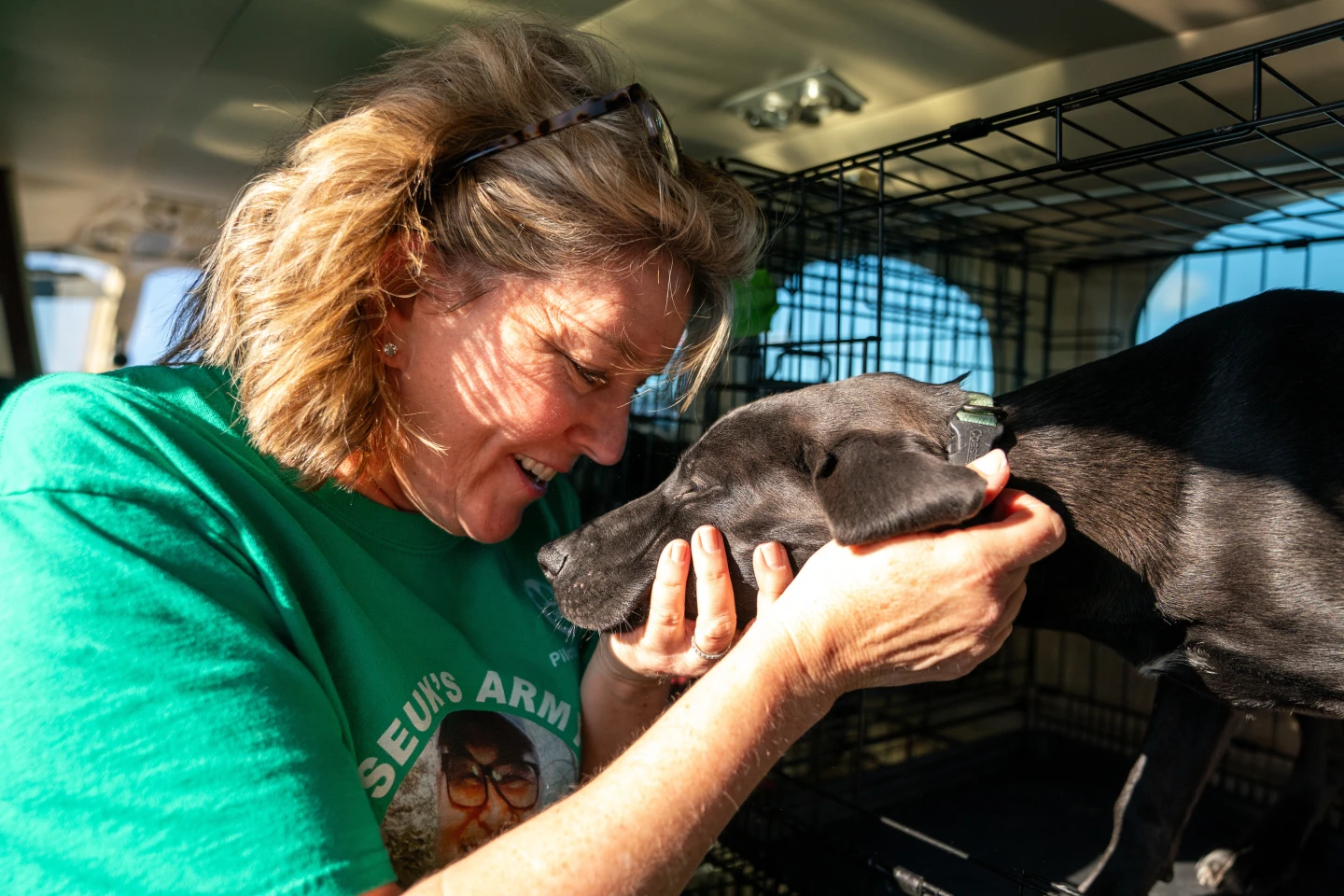
  • The First 72 Hours: How to Decompress a Rescue Dog After Transport

    The foster guide that saves lives before the adoption even happens

    When a rescue dog arrives after transport, something important needs to be said:

    That dog isn’t “starting over” at zero.

    That dog is arriving with a full backpack.

    A backpack filled with:

    • stress
    • noise
    • confusion
    • exhaustion
    • uncertainty
    • and in many cases… trauma

    But they’re also arriving with something powerful:

    A second chance.

    At Seuk’s Army, rescue transport is the lifeline — but fostering is the landing pad.

    And one of the biggest differences between a successful foster placement and a foster that feels overwhelming comes down to this:

    the first 72 hours.

    That window is where trust is built or broken.

    So if you’re fostering (or considering fostering) this blog is your step-by-step guide.

    Not theory.

    Real rescue reality.


    Why Decompression Matters More Than “First Impressions”

    A lot of fosters worry they’ll mess up.

    They think:

    • “What if the dog doesn’t like me?”
    • “What if they’re scared?”
    • “What if they growl?”
    • “What if they have accidents?”

    Let us relieve you:

    A rescue dog’s first behavior is not their personality.

    It’s their nervous system talking.

    Transport + shelter stress puts dogs into a state of survival:

    • hypervigilance
    • shutdown
    • fear-based reactions
    • unpredictable energy
    • or complete withdrawal

    Decompression is the process of telling the dog, gently:

    You don’t have to survive anymore. You’re safe.


    The Foster Mindset: “Low Expectations, High Love”

    In the first 72 hours, success is NOT:

    • a perfect leash walk
    • instant cuddles
    • obedience
    • calmness
    • a cute social media video

    Success is:

    ✅ eating
    ✅ drinking
    ✅ resting
    ✅ feeling safe
    ✅ learning the new environment won’t hurt them

    Your job is not to “fix” the dog.

    Your job is to stabilize the dog.


    The 72 Hour Decompression Plan (Seuk’s Army Foster Method)

    Hour 0–6: The Arrival (“Quiet Mode”)

    This is the most important part.

    When the dog comes home:

    ✅ Do:

    • keep your home calm and quiet
    • speak softly
    • allow sniffing at their own pace
    • take them outside for a bathroom break immediately
    • guide them into one prepared safe space (crate, playpen, gated room)

    ❌ Don’t:

    • introduce the whole family at once
    • allow visitors
    • bring them to a pet store
    • hover and crowd them
    • force affection
    • let them meet resident pets immediately

    Golden rule:
    If the dog looks overwhelmed, you’re moving too fast.


    Safe Space Setup (Before the Dog Arrives)

    Your “safe space” should have:

    • a crate or gated area
    • water bowl
    • blanket or bed
    • chew toy
    • optional: calming music or white noise
    • minimal foot traffic

    This is not isolation.

    This is protection.

    For rescue dogs, space = safety.


    Hour 6–24: The First Night (“Let Them Exhale”)

    This stage is about one thing:

    Routine.

    A rescue dog doesn’t know what your home means yet.

    So routine becomes the language of safety.

    Suggested schedule:

    • potty break every few hours
    • feed at same time as you plan to long-term
    • short, calm walks only
    • return to safe space frequently
    • early bedtime

    If the dog is nervous at night:

    • cover part of crate with a blanket
    • keep lights low
    • avoid constant checking (it adds energy)

    Remember: the goal is rest.


    Day 2: The Adjustment (“You’ll See a Shift”)

    Day 2 is often the most misunderstood.

    Many fosters say:

    “The dog was quiet yesterday… now they’re wild.”

    Or:

    “They were sweet… now they’re barking.”

    That doesn’t mean something went wrong.

    It usually means:

    The dog is coming out of shutdown.

    They’re testing the environment.

    They’re starting to feel.

    That’s progress — as long as you keep things calm.

    What to do on Day 2:

    ✅ leash walk with structure
    ✅ short training moments (sit, name recognition)
    ✅ feed in a consistent spot
    ✅ give chew toys
    ✅ keep boundaries (no free roaming yet)


    Day 3: The Trust Begins (“Now the Real Dog Appears”)

    By day 3, most rescue dogs begin to show glimpses of who they really are.

    You may see:

    • tail wagging
    • playful bouncing
    • zoomies
    • curiosity
    • interest in toys
    • leaning into affection

    This is when fosters start to say:

    “Oh… there you are.”

    That’s why fostering matters.

    Because many dogs never get to show that side in a shelter.


    Common Rescue Behaviors in the First 72 Hours (And What They Mean)

    1) They won’t eat

    Normal.

    Stress can shut down appetite.

    ✅ Solution:

    • leave food in safe space
    • try bland food topper (with rescue approval)
    • don’t hand-feed constantly (creates pressure)

    2) They sleep constantly

    Also normal.

    Shelters and transport are exhausting.

    ✅ Let them rest.


    3) Accidents in the home

    Extremely common.

    Dogs may not know your routine yet.

    ✅ Solution:

    • increase potty breaks
    • praise outside
    • no punishment (ever)

    4) They hide

    Hiding is safety seeking.

    ✅ Give them time. No dragging.


    5) Barking / growling

    This can be fear, not aggression.

    ✅ Solution:

    • increase space
    • reduce stimulation
    • do not push introductions

    Introducing Resident Pets (Do Not Rush This)

    This is where many fosters accidentally create problems.

    Do NOT introduce dogs face-to-face immediately.

    Instead:

    1. scent introduction (blankets, space swapping)
    2. barrier intro (baby gate)
    3. parallel walks
    4. supervised short meeting outside
    5. increase time gradually

    If you go fast, you can cause setbacks.

    If you go slow, you build success.


    Why This Matters to Seuk’s Army

    Transport rescue saves lives.

    But foster homes transform lives.

    A dog can leave a shelter and still fail if their first landing is chaotic.

    So when you foster with a decompression plan, you’re doing something powerful:

    You’re turning rescue into retention.

    You’re turning survival into stability.
    You’re turning chaos into trust.

    That’s the mission.

    That’s Seuk’s Army.


    Closing: Foster the Dog Like You’re Teaching Them the World Is Safe Again

    Because you are.

    The first 72 hours are not about perfection.

    They’re about rebuilding belief.

    A rescue dog doesn’t need you to be a trainer.

    They need you to be:

    • calm
    • consistent
    • patient
    • safe

    And in exchange…

    you’ll watch something incredible happen:

    A dog who expected nothing…

    starts expecting love.

    And that’s when the rescue story really begins.

    No paws left behind.

  • Where Your Donation Goes: The Real Rescue Costs Nobody Talks About

    Transparency matters — because lives depend on it

    One of the most common questions people ask when they’re thinking about donating is simple:

    “Where does the money actually go?”

    And to be honest — that’s not a cynical question.

    That’s a wise question.

    In a world where people are overwhelmed with fundraising requests, ads, and causes pulling in every direction, donors deserve clarity.

    They deserve honesty.

    And they deserve the peace of knowing this:

    If I give, it’s going to matter.

    At Seuk’s Army, we believe transparency isn’t a feature — it’s part of our responsibility.

    Because this isn’t just about animals.

    It’s about trust.

    And trust is the fuel that keeps rescue alive.

    So let’s talk about it — plainly, clearly, and without fluff:

    Here’s what your donation actually supports when you give to Seuk’s Army.


    Rescue Is Not Free — Even When Love Is

    Animal rescue looks beautiful on the outside.

    A dog stepping onto grass.
    A cat curled up on a couch.
    A happy adoption photo.
    A before-and-after transformation.

    But behind every “after” photo… there is an invisible list of costs that had to be paid first.

    Even when pilots volunteer.

    Even when fosters open their homes.

    Even when the rescue runs on heart.

    Love doesn’t pay for vaccines.

    Hope doesn’t pay for fuel.

    Compassion doesn’t cover emergency vet bills.

    That’s why donations matter.

    Not because we want to “grow.”

    Because animals will die if we don’t.

    That’s the truth.


    1) Transport Costs (Yes — Even With Volunteer Pilots)

    People assume that because pilots volunteer, transport is free.

    But transport still requires:

    • fuel
    • airport fees
    • maintenance and safety checks
    • crate equipment
    • coordination costs
    • ground transport support
    • emergency rerouting due to weather

    A rescue mission often involves multiple legs — and each one adds cost.

    Every transport mission is a moving machine.

    And every moving machine requires resources.


    2) Veterinary Care: The Biggest and Most Urgent Expense

    This is the part of rescue that hits the hardest.

    Because when an animal arrives from an overcrowded shelter, it may not just be scared.

    It may be sick.

    It may be injured.

    It may be neglected.

    Some rescue pets arrive with:

    • parasites
    • skin infections
    • ear infections
    • malnutrition
    • fractured teeth
    • untreated wounds
    • limping or orthopedic issues
    • heartworm exposure
    • respiratory illness

    And even the “healthy” ones still need basics:

    ✅ vaccinations
    ✅ rabies shots
    ✅ deworming
    ✅ flea/tick prevention
    ✅ spay/neuter
    ✅ microchip
    ✅ vet exam paperwork

    These aren’t optional add-ons.

    They’re what prepare the animal for a safe, adoptable future.

    When you donate, you’re not just paying for medicine.

    You’re paying for a restart.


    3) The Cost of Preventing Outbreaks

    Shelter environments are high risk for illness.

    Transport environments can be high risk too if safety isn’t taken seriously.

    So rescue organizations must invest in prevention:

    • disinfectants
    • cleaning supplies
    • gloves and sanitation
    • quarantine support
    • vet testing when needed
    • isolation crates
    • extra bedding and towels

    It may sound mundane — but it’s lifesaving.

    Because disease spreads fast where animals are stressed and close together.


    4) Fosters Need Support (Because Fosters Aren’t Paid)

    Fosters are heroes.

    But fostering isn’t free.

    A foster home may need:

    • food
    • crates
    • leashes and harnesses
    • bowls
    • puppy pads
    • training treats
    • calming aids
    • flea/tick supplies
    • bedding and blankets

    Most fosters are already giving the greatest gift they can:

    their home.

    When Seuk’s Army supports fosters, we’re not “spoiling them.”

    We’re keeping them in the fight.

    Because a supported foster is a sustainable foster.

    And sustainable fostering saves lives long-term.


    5) Emergency Cases (The Ones Nobody Plans For)

    Rescue doesn’t happen on a schedule.

    Emergencies hit with no warning.

    A dog may arrive and crash medically.

    A cat may suddenly need surgery.

    A shelter may call with a last-minute plea:

    “If you don’t take these animals today… they won’t make it.”

    Emergency rescues require a rescue to be ready.

    And “ready” means a reserve exists.

    Donations often become:

    • emergency vet funds
    • after-hours clinic payments
    • unexpected transport costs
    • urgent medication

    When you donate, you’re helping Seuk’s Army say:

    “Yes, we can take them.”

    Even when it’s hard.

    Even when it’s last minute.

    Even when nobody else can.


    6) Admin Isn’t a Dirty Word — It’s Rescue Infrastructure

    Some people get nervous when they hear “admin costs.”

    But here’s the truth:

    Rescue organizations are not just emotional support groups.

    They are operational systems.

    Seuk’s Army has to manage:

    • legal compliance
    • nonprofit operational costs
    • insurance needs
    • transport coordination
    • record-keeping
    • adoption applications
    • volunteer onboarding
    • communication systems
    • outreach & education

    If rescue is chaos, animals fall through cracks.

    So admin is not a waste.

    Admin is what makes rescue scalable, safe, and accountable.


    You Are Not “Just Donating.” You Are Buying Time.

    If you want the simplest explanation of all:

    Donations buy time.

    Time for a dog to be seen.
    Time for a cat to be treated.
    Time for a foster to step up.
    Time for transport to be arranged.
    Time for the clock to stop ticking.

    And for some shelter pets…

    time is the only thing standing between life and death.


    Seuk’s Army Exists to Turn Giving Into Guaranteed Impact

    We understand something deeply:

    People want to give — they just want to know it matters.

    At Seuk’s Army, donations aren’t thrown into a vague mission.

    They’re translated into something real:

    • missions launched
    • animals saved
    • vet bills paid
    • fosters supported
    • shelters relieved
    • lives rewritten

    That’s not marketing language.

    That’s the work.


    Closing: Every Dollar Is a Vote for Life

    When you donate to Seuk’s Army, you’re casting a vote.

    Not political.

    Spiritual.

    Moral.

    A vote that says:

    • this life has value
    • this animal deserves better
    • we won’t abandon them
    • we refuse to accept shelter overcrowding as the ending

    You’re joining the Army.

    And together, we’re turning tragedy into momentum, grief into purpose, and missions into miracles.

    Because in Seuk’s Army…

    no paws are left behind.
  • What Rescue Pilots Really Do: The Hidden Logistics Behind Saving Shelter Pets

    It’s not “just a flight.” It’s a lifeline.

    When people hear the words “rescue pilot,” most imagine something cinematic.

    A small plane.
    A runway.
    A heroic moment.

    And yes — there is something heroic about it.

    But what most people don’t understand is this:

    Rescue pilots don’t just fly planes.

    They carry life.

    They carry urgency.
    They carry the weight of a shelter clock.
    They carry responsibility most people never see.

    At Seuk’s Army, rescue transport is one of the most mission-critical parts of what we do — not because it looks cool, but because it changes the outcome for animals who otherwise may never have gotten a chance.

    This is what rescue pilots really do.
    This is what rescue transport really means.
    And why it matters more than the world realizes.


    A Rescue Flight Isn’t “A Trip.” It’s a Rescue Operation.

    Most flights are planned around convenience.

    Rescue flights are planned around survival.

    That’s the difference.

    The animals being transported aren’t simply “going somewhere else.”

    Many of them are coming from:

    • shelters that are over capacity
    • rural facilities with limited adoption options
    • neglect cases that require immediate placement
    • areas with overwhelming stray populations
    • time-sensitive situations where space is running out

    So when Seuk’s Army runs a mission, we’re not just moving dogs.

    We’re relocating hope.

    And yes — the logistics are intense.


    It Starts with Coordination (and Often Chaos)

    Before a plane ever takes off, a rescue mission requires multiple moving parts to align perfectly:

    • rescue partners confirming intake space
    • foster homes or adopters ready for arrival
    • medical records and vaccination paperwork prepared
    • crates and safety equipment secured
    • weather monitored (constantly)
    • flight routing planned
    • ground transport scheduled
    • animals evaluated for safe travel

    Rescue transport has no “easy mode.”

    Because animals are not cargo.

    They are living beings — each with their own temperament, fear, history, and needs.

    And the pilot becomes part of that responsibility.


    These Missions Are Fueled by Service, Not Profit

    This is important to say clearly:

    Rescue pilots are often volunteers.

    They are not getting rich.

    They are giving their time, their resources, and their energy to help animals they may never see again.

    That means:

    • fuel costs
    • plane maintenance
    • time off work
    • pre-flight inspections
    • early mornings
    • late nights
    • long drives to and from airports
    • unexpected delays

    The people who do this do it for one reason:

    because they believe every life matters.


    Animals Don’t Fly Like Humans Fly

    This isn’t like checking in luggage.

    Animals often arrive:

    • frightened
    • confused
    • overstimulated
    • exhausted
    • unsure who to trust

    Some have never been inside a crate.
    Some have never felt safety.
    Some have only known survival.

    And yet… they get loaded up for a mission they don’t understand.

    So pilots and rescue teams step into a role that requires more than aviation knowledge.

    They step into the role of:

    • calm presence
    • safety provider
    • protector
    • stabilizer

    This is why Seuk’s Army cares deeply about ethics and care.

    Because transport must always be:

    safe, humane, and respectful.


    The Real Miracle Happens When They Land

    When a rescue plane touches down, something extraordinary occurs.

    Not because it’s dramatic…

    but because it’s final.

    A dog who was on a euthanasia deadline…

    is now in a different world.

    Different culture.
    Different shelter conditions.
    Different foster availability.
    Different adoption demand.

    That landing often means:

    the shelter clock stops ticking.

    That animal now has time.

    And time changes everything.


    Why Rescue Transport Saves More Lives Than Any One Shelter Can

    This is something that needs to be understood nationally:

    Shelter overcrowding is not evenly distributed.

    Some shelters have too many animals and too few homes.

    Other regions have potential adopters but fewer available rescue animals.

    Transport bridges that imbalance.

    It creates a rescue pipeline that allows animals to move toward opportunity — instead of being trapped by geography.

    That’s why transport isn’t optional.

    It’s one of the most powerful rescue tools we have.


    Seuk Kim: A Life That Proved What It Means to Serve

    The reason Seuk’s Army exists is because Seuk lived this kind of service.

    He didn’t just love animals.

    He showed it in action — in a way that carried risk, responsibility, and sacrifice.

    And after losing him, the mission didn’t die.

    It grew.

    Because some people leave behind more than memories.

    They leave behind purpose.

    And Seuk’s purpose is still moving.

    Still saving.

    Still flying.


    How You Can Support Rescue Pilots (Even Without a Plane)

    People often ask:

    “What can I do if I’m not a pilot?”

    The answer is: a lot.

    You can support transport rescue by:

    Donating (fuel, crates, medical costs, paperwork, emergency vetting)
    Fostering (creates landing space for transports)
    Volunteering (ground transport + coordination)
    Sharing missions (visibility creates resources and fosters)
    Partnering (business/community support builds sustainable rescue systems)

    Rescue pilots may fly the mission…

    …but it takes an entire Army to make it possible.


    Closing: The World Sees a Plane — We See a Lifeline

    A plane in the sky looks like a small thing.

    A speck.

    But inside that plane could be:

    • 8 dogs
    • 10 cats
    • 12 lives that were running out of time
    • a second chance that didn’t exist yesterday

    That’s what rescue pilots really do.

    They don’t just fly.

    They deliver futures.

    And at Seuk’s Army, we will never stop honoring that mission — because in this Army…

    no paws are left behind.

  • Foster Homes: The Quiet Heroes Who Save Lives Without Ever Being Seen

    Why fostering is the most powerful “yes” a person can give

    When people think of animal rescue, they usually picture one of two things:

    1. a shelter kennel with a sad face behind it
    2. a rescue video where a dog’s tail starts wagging again

    And those moments are real.

    But there’s something even more important — something that happens between the shelter and the forever home.

    Something that doesn’t get the attention it deserves.

    Something Seuk’s Army could not exist without.

    That thing is:

    Fostering.

    Fosters aren’t just helpers.

    They are the reason rescue transport works at all.

    They are the reason shelters get relief.

    They are the reason an animal can go from “risk” to “ready.”

    And often… they do it without anyone ever knowing their name.


    The Rescue Chain Has One Weak Link: Space

    Every rescue organization runs into the same limitation:

    Not funding.
    Not passion.
    Not even volunteers.

    The real limitation is simple:

    Where will the animal go tonight?

    Even after a transport mission saves an animal from a shelter, the rescue chain can only continue if there’s a place for them to land.

    A foster home is a landing pad.

    Without fosters, animals get stuck in transition — and rescue becomes impossible to scale.

    That’s why fostering isn’t a “nice extra.”

    It’s the backbone of saving lives.


    What a Foster Home Really Does (That a Shelter Often Can’t)

    Shelters are overwhelmed.
    It’s not their fault.
    It’s just reality.

    But shelters are not designed to offer what many animals need most:

    Decompression

    When a dog leaves a shelter environment, they aren’t instantly “okay.”

    They’re coming out of:

    • loud barking
    • nonstop movement
    • cold concrete
    • unfamiliar smells
    • limited human attention
    • uncertainty

    Even friendly dogs can shut down in shelters.
    Even sweet dogs can appear “different” under stress.

    A foster home gives them something a shelter rarely can:

    peace.


    The Dog You Foster Might Not Be the Dog You Met

    This is important.

    Some dogs in shelters look:

    • depressed
    • scared
    • reactive
    • withdrawn
    • loud
    • “hard to handle”

    But then they get into a foster home…

    …and they transform.

    Because the dog you saw in the shelter wasn’t their real personality.

    It was survival mode.

    In a foster home, that same dog may become:

    • cuddly
    • gentle
    • playful
    • trusting
    • calm
    • eager to learn

    Fosters don’t just house dogs.

    They reintroduce dogs to life.


    Why Foster Homes Save More Than One Life

    Here’s a truth that changes how you view fostering:

    Every foster “yes” saves at least two lives.

    Life #1: the animal you fostered
    Life #2: the animal that gets the open shelter/kennel space you created

    When a foster takes a dog in, it creates a domino effect:

    • rescue has room to pull another dog
    • transport missions have somewhere to deliver
    • shelters have relief
    • euthanasia risk decreases

    One foster home can become the difference between “full” and “possible.”


    “I Can’t Foster… I’m Not Ready” (Yes You Are)

    A lot of people think fostering requires some special skill set.

    They imagine:

    • perfect schedules
    • big houses
    • big yards
    • training experience
    • dog psychology degrees

    But fostering isn’t about perfection.

    It’s about providing:

    • a safe space
    • food and water
    • compassion
    • patience
    • consistency

    Seuk’s Army fosters come from all backgrounds:

    • people in apartments
    • families with kids
    • retirees
    • young professionals
    • first-time pet owners
    • experienced rescue advocates

    The common thread isn’t skill.

    It’s heart.


    What Most People Don’t Know: Foster Dogs Are Often the Easiest Dogs

    This surprises people.

    Many fosters aren’t “problem dogs.”

    They’re normal dogs who simply need:

    • a break from shelter stress
    • a short period of care
    • basic routine
    • visibility (good photos + adoption bio)

    In fact, foster dogs often make amazing temporary companions because:

    • they’re grateful
    • they settle quickly
    • they bond fast
    • they want to belong

    A foster home gives them the chance to show that.


    The Part That Makes People Hesitate: “I’ll Get Attached”

    Yes.
    You will.

    Because love happens.

    That’s the point.

    But rescue people will tell you something powerful:

    You don’t foster because it’s easy.

    You foster because it matters.

    And here’s the part nobody expects:

    You don’t lose love when you hand a foster over to their forever family.

    You multiply it.

    That adopter doesn’t erase your role.

    They complete it.

    And the dog never forgets the season of life when you were the person who made them feel safe again.


    Seuk’s Army Needs Foster Homes Like Planes Need Runways

    This isn’t a metaphor.

    Rescue transport cannot operate without foster capacity.

    If Seuk’s Army flies in dogs and there’s nowhere for them to go — rescue pauses.

    Not because hearts stop caring.

    But because reality demands structure.

    So we say it clearly:

    If you want to support rescue but don’t know where to start…

    Start with fostering.

    Because fostering is action.


    What You’re Really Doing When You Foster

    You’re not just letting a dog stay at your house.

    You’re doing something spiritual, whether you realize it or not:

    • you’re restoring trust
    • you’re proving kindness exists
    • you’re reversing trauma
    • you’re giving safety a second chance

    In a world that abandons animals…

    you become the opposite.

    You become a place where abandonment ends.


    Closing: Foster Homes Are the Front Line

    Some heroes wear uniforms.
    Some heroes fly rescue missions.
    Some heroes donate quietly.

    And some heroes open their front door and say:

    “Come inside. You’re safe here.”

    That’s fostering.

    It’s not glamorous.
    It’s not always easy.

    But it saves lives.

    And Seuk’s Army will always be built on the people who choose to love animals during the in-between — when they’re not adopted yet… but they’re not forgotten either.

    Because in Seuk’s Army…

    No paws are left behind.

  • The Shelter Clock: Why Rescue Transport Saves Lives Before It’s Too Late

    Because “Overcrowded” Is Not Just a Word — It’s a Deadline

    There’s a quiet phrase that gets used in animal rescue that most people don’t understand the first time they hear it.

    It sounds clinical.
    It sounds “normal.”
    It sounds like something that could be solved with a few extra cages.

    That phrase is:

    “Shelter overcrowding.”

    But inside the rescue world, overcrowding doesn’t just mean “too many animals.”

    Overcrowding means a clock has started.

    And once that clock starts, the rules change.

    Not because shelters don’t care — but because they don’t have a choice.

    At Seuk’s Army, we want more people to understand the truth about what overcrowding really means — and why rescue transport is one of the most powerful, urgent tools we have to save lives.


    When a Shelter Runs Out of Space, the Animals Don’t Stop Coming

    Picture this:

    A shelter has 60 kennels.

    But it has 84 dogs.

    And every day, more come in:

    • strays picked up by Animal Control
    • owner surrenders from eviction, illness, job loss
    • unplanned litters dropped at the front door
    • dogs found on highways and rural roads
    • cruelty and neglect cases needing immediate placement

    Most shelters don’t have the luxury of saying:

    “We’re full.”

    Because the animals don’t have a second option.

    So what happens?

    They cram.

    They improvise.

    They put kennels in hallways.

    They double-stack.

    They beg fosters.

    They call rescues.

    They skip lunch.

    They do miracles for as long as miracles can last.

    And then… the part nobody wants to talk about hits.


    The Hardest Word in Rescue: “Capacity”

    It’s the word that breaks volunteers.

    It’s the word that haunts shelter staff.

    It’s the word most people don’t even know exists:

    Euthanasia for capacity.

    Not because an animal is aggressive.
    Not because it’s sick beyond saving.
    Not because it’s hopeless.

    But because there is literally nowhere to put them.

    That’s what overcrowding becomes: a deadline.

    Because when shelters hit capacity, they’re forced into a choice no compassionate person ever wants to make.

    And this is why rescue transport matters so much.


    Adoption Rates Are Not Equal Everywhere

    This may shock people, but it’s the reality:

    Some regions of the country have more demand than supply when it comes to adoptable pets.

    Other regions have shelters overflowing to the point where adoption is simply not enough.

    In many Southern areas, shelters fight an uphill battle every single day:

    • high stray populations
    • limited spay/neuter resources
    • rural abandonment
    • limited local adoption interest
    • limited shelter funding and staffing

    The shelter can post the cutest dog in the world…

    …and still not get one application.

    Not because the dog isn’t good.

    But because rescue is not just about animals.

    It’s about systems.

    It’s about resources.

    It’s about population imbalance.

    That means the solution isn’t always “try harder.”

    Sometimes the solution is simply:

    Move the animal to where they have a chance.


    Transport Isn’t Just Logistics — It’s Life Support

    When Seuk’s Army runs rescue transport missions, we aren’t just giving animals a ride.

    We’re giving them something bigger:

    Time.

    Time to be seen.
    Time to be fostered.
    Time to be adopted.
    Time to breathe.

    Visibility.

    Some shelters are invisible because they’re rural or overwhelmed.
    Transport makes these animals seen again.

    Opportunity.

    A different region can mean:

    • better foster availability
    • better medical access
    • higher adoption rates
    • more rescue capacity

    A reset.

    A dog on the shelter clock gets moved out of emergency status and into a future.

    Transport changes everything.


    “But Why Can’t the Shelter Just Keep Them Longer?”

    That’s one of the most common questions.

    And it’s a fair one.

    But here’s what people don’t see:

    • every kennel space is a decision
    • every day costs food, staff time, cleaning supplies
    • disease spreads faster when dogs are stressed and cramped
    • parvo and kennel cough can wipe through shelters
    • shelter staff aren’t sleeping — they’re surviving
    • volunteers are outnumbered and emotionally exhausted

    Shelters aren’t heartless.

    They’re drowning.

    And when drowning, even good people make decisions they never wanted to make.

    This is why transport rescue exists.

    Not to shame shelters.

    To support them.


    The Most Important Thing Seuk’s Army Stands For

    Seuk’s Army was built on a simple belief:

    A shelter should not be a finish line.

    It should be a bridge.

    A bridge from:

    neglect → safety
    fear → comfort
    abandonment → belonging

    That’s why transport missions matter.

    They take animals from shelters that are overloaded and under-resourced — and move them to places where they can actually be adopted.

    Transport isn’t a luxury.

    It’s a lifeline.


    What You Can Do to Help — Even If You’re Not a Pilot

    A lot of people assume rescue transport is something only “special” people can do.

    Not true.

    You can help Seuk’s Army save animals on the shelter clock in several real ways:

    1) Foster

    Fostering creates space.
    Space saves lives.

    Even 2 weeks matters.

    2) Donate

    Transport missions take resources:

    • fuel
    • crates
    • vetting
    • paperwork
    • coordination
    • emergency care

    3) Volunteer (Ground Support)

    Rescue needs:

    • drivers
    • event helpers
    • logistics
    • organization
    • outreach

    4) Share the Mission

    Awareness creates movement.

    The more people who understand the shelter clock, the more people will act before it’s too late.


    Closing: The Clock Is Real — But So Is Hope

    There are animals right now sitting in shelters who are:

    • healthy
    • friendly
    • adoptable
    • loving
    • ready

    And the only thing standing between them and life…

    is time.

    Seuk’s Army exists to fight that clock.

    Not with arguments.
    Not with guilt.

    But with action.

    Transport.
    Fosters.
    Volunteers.
    Donors.
    Partners.

    A mission that refuses to accept “overcrowded” as an ending.

    Because in Seuk’s Army…

    no paws are left behind.

  • Seuk’s Army: How One Loss Became a Lifeline for Thousands

    No Paws Left Behind

    There are moments in life that don’t just change you — they divide time.

    There’s the world before it happened…
    and the world after.

    For Seuk’s Army, that moment came with a tragedy that no one could have imagined — and no one could ever truly be prepared for.

    On November 24, 2024, Seuk Kim, a volunteer pilot and animal rescue advocate, lost his life during a mission that was built on compassion. Not a thrill ride. Not a hobby flight. A rescue mission. The kind that most people don’t even know exists — the kind of mission where a person uses their own time, their own resources, and their own heart to move animals from danger into hope.

    And in the aftermath of that loss, something happened that defines what Seuk’s Army is today:

    Instead of the story ending…
    the mission grew.

    What Seuk Started Didn’t Die With Him

    The name “Seuk’s Army” is not a brand.

    It’s not marketing.

    It’s not a catchy nonprofit title.

    It is a promise.

    It is proof that Seuk was the type of person who didn’t just care about animals in theory — he cared in action. He cared enough to plan, to fly, to coordinate, to sacrifice comfort, time, money, and normalcy… all for creatures who could never repay him.

    That’s what Seuk believed:

    Every animal deserves a chance.

    Not because they’re profitable.
    Not because they’re perfect.
    Not because they’re easy.

    Because they’re alive.

    And because being alive should mean something.

    That belief is why Seuk’s Army exists — to carry forward that compassion with relentless consistency.

    The Part Most People Don’t Understand About Rescue

    When people think of rescue, they picture a shelter.
    A kennel.
    A donation box.
    Maybe a volunteer walking dogs.

    But there’s a brutal truth behind the scenes:

    Some shelters are so overwhelmed that “overcrowded” doesn’t begin to describe it.

    In many Southern and rural areas, shelters are hit with:

    • high stray populations
    • limited funding
    • limited fosters
    • limited adopters
    • limited space
    • limited medical resources

    And when those conditions stack up long enough, shelters face the most painful decision imaginable — euthanasia due to capacity.

    Not because the animals are “bad.”
    Not because they’re unlovable.
    But because there simply isn’t anywhere else to put them.

    That’s the crisis Seuk’s Army was built to fight.

    Not with words.
    With movement.

    Saving Lives, One Flight at a Time

    Seuk’s Army is a rescue organization powered by something truly unique:

    a network of volunteer pilots and rescue partners.

    That means instead of leaving animals trapped in areas with overflowing shelters, Seuk’s Army can coordinate transport missions — lifting animals out of crisis zones and bringing them to communities with higher adoption and foster opportunities.

    Think about that.

    A dog that was days away from being put down…
    gets a flight…
    lands somewhere new…
    and suddenly has a future.

    That’s not charity.

    That is warfare against hopelessness.

    And Seuk’s Army does it step by step:

    1. Identify & Coordinate with shelters and rescue partners
    2. Fly Rescue Missions with volunteer pilots
    3. Rehome & Rebuild through fosters and adoption networks

    That’s not just a mission statement — it’s a system.

    And systems save more lives than emotions ever can.

    The Memorial Mission: A Symbol for What We Refuse to Become

    On the anniversary of Seuk’s passing, Seuk’s Army didn’t slow down.

    They did what Seuk would’ve done.

    They moved forward.

    One memorial mission transported over 100 animals toward safety — a number that reflects growth, coordination, and pure determination.

    But it wasn’t just about the animals.

    It was about what that mission represented.

    That even when tragedy hits…
    even when grief tries to close your throat…
    even when the world says “stop”…

    You choose to keep going.

    Because there are still paws waiting.
    Still shelters calling.
    Still lives on the clock.

    Why This Isn’t Just an Animal Cause — It’s a Human Cause

    Here’s what rescue teaches you quickly:

    You don’t rescue animals without meeting human pain too.

    You meet:

    • families that surrender pets because of eviction or poverty
    • shelters run by exhausted staff who cry behind closed doors
    • fosters who keep saying “yes” even when their hearts are tired
    • volunteers who work full-time jobs and still spend nights transporting, cleaning, calling, coordinating

    Seuk’s Army exists for animals — but it’s also a lifeline for the humans who love them enough to fight for them.

    Seuk’s Legacy Is Not a Memory — It’s a Movement

    Seuk’s Army was born from loss, but it’s powered by something greater:

    purpose.

    Because when someone like Seuk gives their life serving something good, the worst thing we could do is let that impact fade into a sad story.

    Seuk isn’t just remembered — he’s multiplied.

    Every rescue mission says:

    “We’re still here.”

    Every successful adoption says:

    “Your life mattered.”

    Every volunteer who steps up says:

    “You didn’t fly alone.”

    And every animal that goes from shelter floor to warm bed says:

    “No paws left behind.”

    How You Can Be Part of Seuk’s Army

    If this story moved you, good.

    That means the mission is working.

    Now it’s your turn.

    You can join Seuk’s Army by choosing one action:

    • Volunteer (help transport, coordinate, support events)
    • Foster (open your home temporarily — it saves lives)
    • Donate (fuel missions, supplies, vetting, logistics)
    • Share the mission (awareness creates resources)

    You don’t have to be a pilot to be part of the Army.

    You just have to care enough to take the next step.


    Final Words

    Seuk’s Army is not just a rescue group.

    It is grief turned into strategy.
    Pain turned into purpose.
    Tragedy turned into momentum.

    And in a world that moves fast and forgets too easily, Seuk’s Army is here to say:

    We will not forget.
    We will not stop.
    We will not leave them behind.

    No Paws Left Behind.

  • Seuk’s Army Turns Tragedy into Lifesaving Momentum for Shelter Pets

    Seuk’s Army Turns Tragedy into Lifesaving Momentum for Shelter Pets

    BRANDY STATION, VA — December 23, 2025 — What began as a grassroots effort by volunteer pilots and animal lovers has grown into a thriving, life-saving network known as Seuk’s Army, dedicated to transporting pets from overcrowded Southern shelters to foster homes and rescue groups across the United States. The organization’s expanded mission honors the legacy of Seuk Kim, a devoted pilot whose fatal plane crash during a rescue mission on November 24, 2024, galvanized volunteers and propelled the group’s impact to new heights.

    News Story URL:

    How Seuk Kim’s tragic plane crash built a volunteer army of pet rescuers | AP News

    Each week, Seuk’s Army coordinates complex airlifts that bring dozens of dogs and cats from regions with overwhelmed shelter systems to communities where adoption and foster placement opportunities are greater. On a recent mission marking the anniversary of Kim’s passing, volunteers successfully transported 117 animals — roughly double the usual number — through a coordinated relay that spanned 16 airfields and multiple modes of transportation.

    “Seuk’s Army is built on the passion and dedication of volunteers who believe every pet deserves a chance at a loving home,” said co-founder Sydney Galley. “While the loss of Seuk was heartbreaking, his spirit continues to inspire us to save more lives each day.”

    Kim, 49, had turned his lifelong dream of flying into a mission of compassion, making multiple rescue flights weekly and encouraging others to join the cause. After his tragic crash in New York’s Catskill Mountains — which claimed the life of one rescue dog — the community rallied, attracting new volunteers, partners, and supporters who have helped expand the mission.

    Seuk’s Army operates largely through the generosity of volunteer pilots, who use their own aircraft and cover flight costs, as well as community fundraisers and local partnerships. Initiatives such as charity runs and collaborative efforts with animal care organizations are helping the group formalize its structure and increase capacity.

    In communities like Heard County, Georgia, Seuk’s Army’s work has had a direct impact: shelter directors report that regular rescue flights have enabled them to avoid euthanasia due to overcrowding.

    As the network continues to grow, Seuk’s Army remains committed to turning tragedy into hope — ensuring that more pets find secure, loving homes while honoring the dedication of those who make it possible.

    Media Contact:
    Bob Krane
    Administrative Manager / Coordinator
    [email protected]

    News Story URL:

    How Seuk Kim’s tragic plane crash built a volunteer army of pet rescuers | AP News

    ###

    Sources: Associated Press coverage of Seuk’s Army rescue flights and volunteer efforts. (AP News)

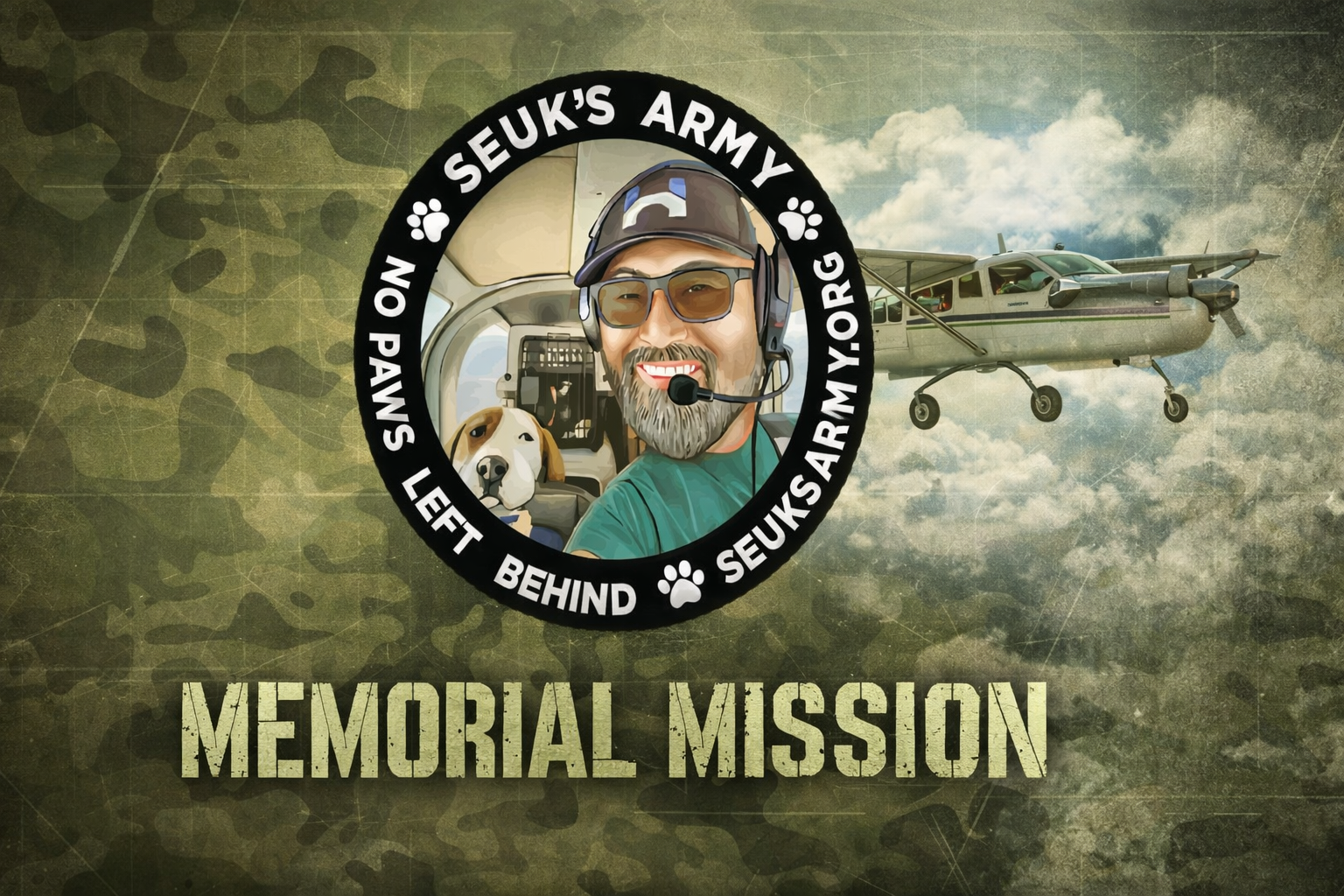
  • Seuk’s Army Memorial Mission

    Seuk’s Army Memorial Mission

    One year ago on November 24th, we lost Seuk in a tragic plane crash. We honored his legacy with a mission that reflects his spirit of compassion and dedication. 💔

    Over 100 animals soared to freedom, on Saturday November 22nd. Thanks to Seuk’s vision and the incredible people who continue his work. Each one will carry with them not just a new chance at life, but also hope for a future filled with love and safety. Every furry passenger echoes Seuk’s vision—one where every animal has a fighting chance.

    This is more than just a flight—it’s a symbol of Seuk’s lasting impact on the world. May his memory soar high! 🌍💚🩶🖤🤍

    We are Seuk’s Army! No Paws Left Behind!

    https://www.facebook.com/reel/24773873232311688